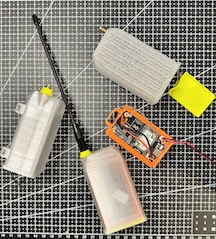
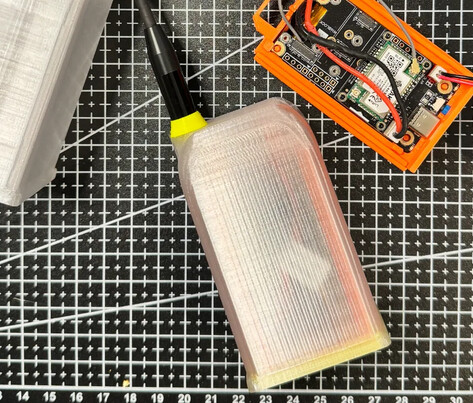
I wanted a case for the RAK Meshtastic starter kit that I could use outdoors with a solar charger, indoors to accurately measure indoor air quality and something small I could travel with. So this is what I built so far, lots of option but even more possibilities
Handy modular WisBlock starter case. Before a remix print, open the STL once and measure a known board / solar cutout against the physical kit so scale isn’t off. A browser STL viewer is enough for that check. CADProps opens STL/STEP among ~92 extensions; natives on CADProps servers. STL Viewer Online: Mesh Dimensions, Area & Volume | CADProps
Measuring a known board or the solar cutout against the physical kit before printing is a sensible step, especially with a remix where scale can drift. I’d add checking the wall thickness too, since those thin features can print undersized even when overall dimensions look fine. Curious whether the original WisBlock starter case has any press-fit parts that a remix could throw off.
The wall thickness point is worth emphasizing—thin features often print undersized even when the overall dimensions check out, so a quick caliper pass on the physical kit before committing to a remix print seems wise. On press-fit parts, that is the question I would ask the original designer too, since a remix that shifts tolerances slightly could turn a snug fit into either a loose one or one that needs forcing. Checking the STL scale against a known board first should catch the gross errors; the fine tolerances are where a test print earns its keep.
Checking wall thickness with calipers is a good call, and I would add verifying the slicer’s horizontal expansion against those measured values rather than trusting the STL alone. On press-fit parts, a test print of just the mating section saves a lot of filament compared with committing to the full case. If the original design relied on a specific printer’s tolerances, a remix may need small offsets on those interfaces. I would also check whether screw bosses or snap tabs changed between versions.