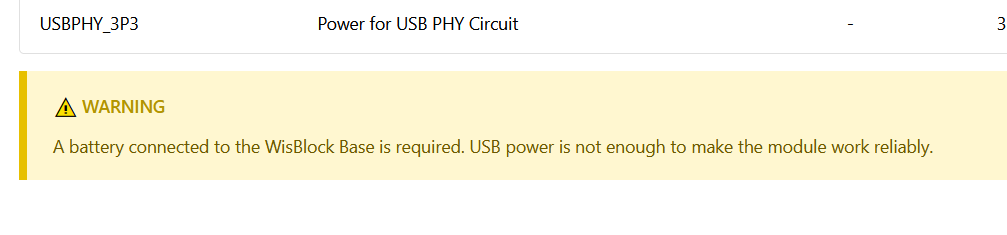
I am building a fleet tracker with the Link.ONE which includes the RAK5860 NB-IoT modem. Per the RAK5860 datasheet, it requires a battery to supply extra current during peak transmit:
However, I have been testing this unit as powered directly by a USB-C cable from my laptop, and it is working perfectly. I am not seeing Unsolicited Messages regarding Low Power, etc. and the unit connects to the T-Mobile network as well as GPS location services with no issues.
The end goal is to power the unit with vehicle ignition (12VDC, using RAK19009 base with power slot module RAK19016) but to also include an 18650 Li battery for backup power when vehicle ignition is off (operating in low power standby mode to conserve battery).
My question is: Why is it working fine in testing with only a USB-C connection? Shouldn’t I be getting low power warning unsolicited messages? Or would this only be sporadic depending on the cellular signal levels and location of the transceiver? or would it be related to the cellular network being used?
Obviously the end design will include a battery, but I am just curious to understand more about this issue, especially what would happen if my backup battery dies due to long period of unuse, then system is re-powered via ignition while battery is still dead.
Also I’ll add here, that BG77 power consumption (and other celullar modules) varies a lot depending of RAT used, band and network coverage. If used on a vehicle, it’s better to stick to LTE-M RAT.
Insight like that are always welcome here. I am not really familiar on Narrowband Cellular IoT since we do not have a local network in my location that offer that service. So those additional info are greatly appreciated